🎓 Admissions Open 2026–27 | Apply for B.E. / B.Tech. / M.E. / M.C.A. Click Here 📞 9842390477, 9488603394 | ☎ (04142) 285645 – 285647

Artificial Intelligence and Data Science (AI & DS) is an emerging and rapidly evolving field that focuses on developing intelligent systems capable of performing tasks that typically require human intelligence. It combines principles from computer science, statistics, and mathematics to analyze large volumes of data, extract meaningful insights, and make informed decisions.

The field of AI & DS plays a crucial role in various domains such as healthcare, finance, education, transportation, and e-commerce. Technologies like machine learning, deep learning, natural language processing, and data analytics are widely used to build smart applications such as recommendation systems, chatbots, predictive models, and autonomous systems.

This interdisciplinary domain equips students with the skills required to handle real-world data, design intelligent algorithms, and solve complex problems efficiently. With the increasing demand for data-driven solutions, AI & DS offers vast career opportunities in roles such as Data Scientist, Machine Learning Engineer, AI Engineer, Data Analyst, and Business Intelligence Developer.

Overall, Artificial Intelligence and Data Science is transforming industries by enabling smarter decision-making and innovation, making it one of the most promising fields in today’s technological landscape.

Vision & Mission

Vision

To craft the young Science, Commerce and Management Graduates as energetic Software Developers bestowed with programming skills to face the global challenges in the field of Information Technology.

Mission
  • To provide high quality technical and competency-based education in the field of computer applications to tomorrows technocrats and software developers.
  • To create Professionals through programmed teaching and hands on training with the state-of-the-art implements.
  • To impart essential qualities to enhance team spirit, dedication and to face the interviews with the art of leadership.
  • To endeavor constant upgradation of technical expertise to cater the graduates to the needs of the society.

Programme Educational Objectives (PEOS)

Utilize their proficiencies in the fundamental knowledge of basic sciences, mathematics, Artificial Intelligence, data science and statistics to build systems that require management and analysis of large volumes of data.

Advance their technical skills to pursue pioneering research in the field of AI and Data Science and create disruptive and sustainable solutions for the welfare of ecosystems.

Think logically, pursue lifelong learning and collaborate with an ethical attitude in a multidisciplinary team.

Design and model AI based solutions to critical problem domains in the real world.

Exhibit innovative thoughts and creative ideas for effective contribution towards economy building.

Programmes Outcomes (POS)

Engineering knowledge: Apply the knowledge of mathematics, science, engineering fundamentals, and an engineering specialization to the solution of complex engineering problems.

Problem analysis: Identify, formulate, review research literature, and analyse complex engineering problems reaching substantiated conclusions using first principles of mathematics, natural sciences, and engineering sciences.

Design/development of solutions: Design solutions for complex engineering problems and design system components or processes that meet the specified needs with appropriate consideration for the public health and safety, and the cultural, societal, and environmental considerations.

Conduct Investigations of Complex Problems: Use research-based knowledge and research methods including design of experiments, analysis and interpretation of data, and synthesis of the information to provide valid conclusions.

Modern Tool Usage: Create, select, and apply appropriate techniques, resources, and modern engineering and IT tools including prediction and modelling to complex engineering activities with an understanding of the limitations.

The engineer and society: Apply reasoning informed by the contextual knowledge to assess societal, health, safety, legal and cultural issues and the consequent responsibilities relevant to the professional engineering practice.

Environment and sustainability: Understand the impact of the professional engineering solutions in societal and environmental contexts, and demonstrate the knowledge of, and need for sustainable development.

Ethics: Apply ethical principles and commit to professional ethics and responsibilities and norms of the engineering practice.

Individual and team work: Function effectively as an individual, and as a member or leader in diverse teams, and in multidisciplinary settings.

Communication: Communicate effectively on complex engineering activities with the engineering community and with society at large, such as, being able to comprehend and write effective reports and design documentation, make effective presentations, and give and receive clear instructions.

Project management and finance: Demonstrate knowledge and understanding of the engineering and management principles and apply these to one’s own work, as a member and leader in a team, to manage projects and in multidisciplinary environments.

Life-long learning: Recognize the need for, and have the preparation and ability to engage in independent and life-long learning in the broadest context of technological change.

Program Specific Outcomes (PSOS)

Evolve AI based efficient domain specific processes for effective decision making in several domains such as business and governance domains.

Arrive at actionable Foresight, Insight, hindsight from data for solving business and engineering problems

Create, select and apply the theoretical knowledge of AI and Data Analytics along with practical industrial tools and techniques to manage and solve wicked societal problems

Develop data analytics and data visualization skills, skills pertaining to knowledge acquisition, knowledge representation and knowledge engineering, and hence be capable of coordinating complex projects.

Able to carry out fundamental research to cater the critical needs of the society through cutting edge technologies of AI.
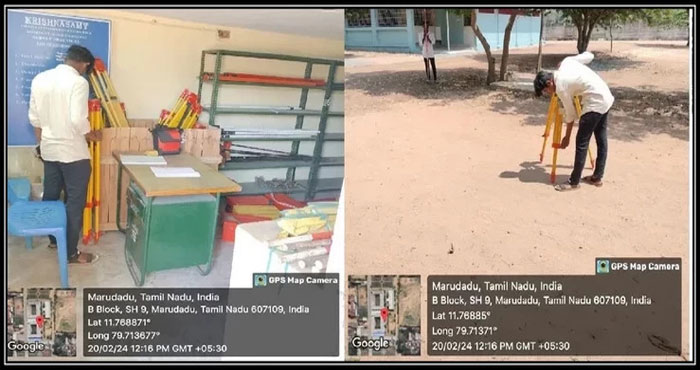
Surveying Laboratory
  • Total Station
  • Transit Theodolite
  • Dumpy Level
  • Plane Table
  • Prismatic Compass
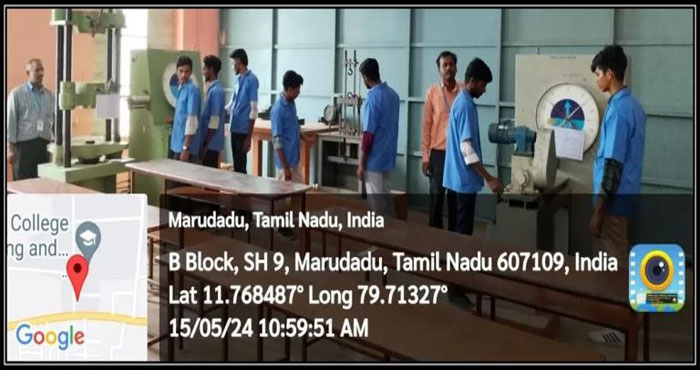
Strength of Materials Laboratory
  • UTM 400 kN
  • Torsion Testing Machine
  • Impact Testing Machine
  • Hardness Testing
  • Beam Deflection Machine
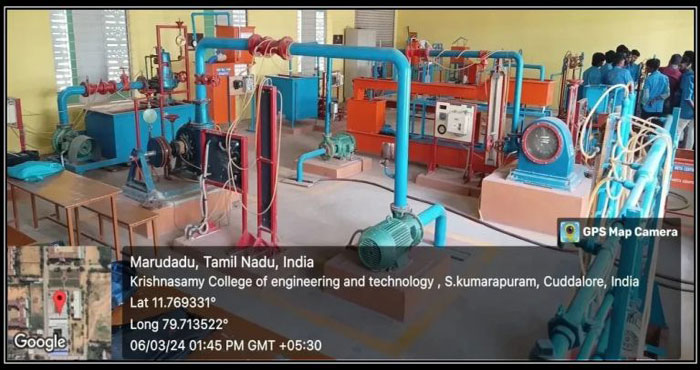
Hydraulic Engineering Lab
  • Bernoulli’s Apparatus
  • Flow Measurement Setup
  • Open Channel Flow
  • Pipe Flow Experiments
  • Losses in Pipes
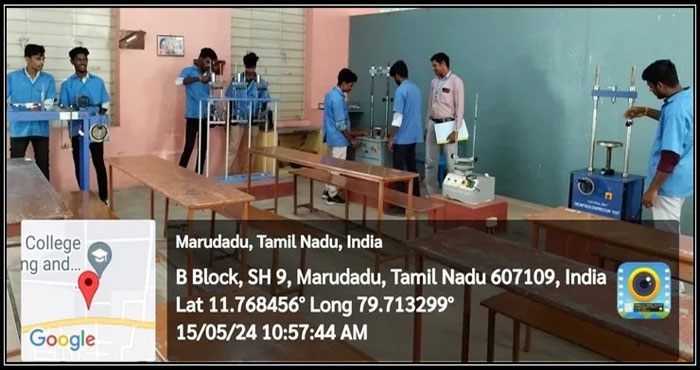
Soil Mechanics Laboratory
  • Proctor Compaction
  • Direct Shear Apparatus
  • Triaxial Shear
  • Relative Density
  • Consolidation Test
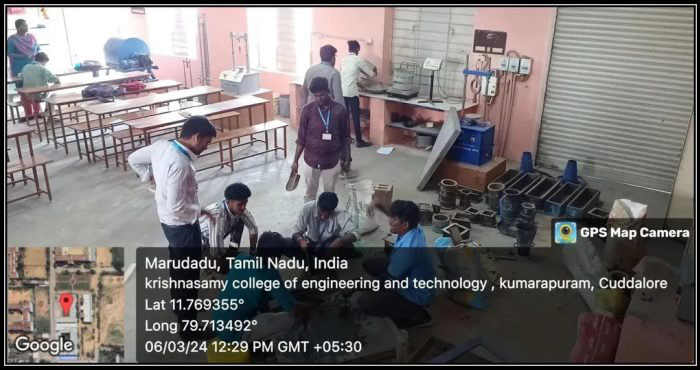
Concrete & Highway Lab
  • Los Angeles Abrasion
  • CBR Apparatus
  • Compression Testing
  • Marshall Stability
  • Vibrating Machine
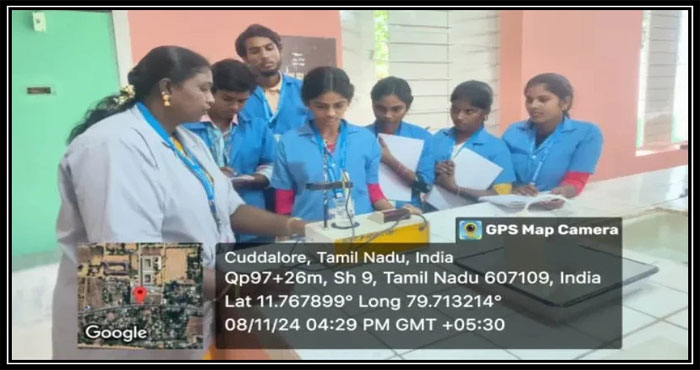
Environmental Engineering Lab
  • BOD Incubator
  • Conductivity Meter
  • Colorimeter
  • COD Apparatus
  • Hot Air Oven

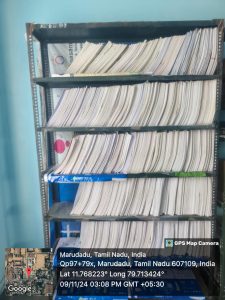
Department Library

Besides the central library, a separate department library is also available, which helps students and staff for their references.
It consists of 193 books covering almost all core subjects of civil engineering like:

  • Strength of Materials
  • Engineering Geology
  • Mechanics of Solids
  • Mechanics of Fluids
  • Surveying
  • Construction Materials
  • Applied Hydraulic Engineering
  • Soil Mechanics
  • Structural Analysis
  • Foundation Engineering
  • Highway Engineering
  • Environmental Engineering
  • Reinforced Concrete Design
  • Steel Structures
  • Structural Dynamics & Earthquake Engineering
  • Prestressed Concrete Structures
  • Water Resources & Irrigation Engineering
  • Railways, Airports & Harbour Engineering
Er. R. Shenbagavalli

Assistant Professor & Hod

Know More
Er. K. Hani Priya

Assistant Professor

Know More
Er. K. Akastiyan

Assistant Professor

Know More
Er. R. Rajalakshmi

Assistant Professor

Know More
Er. D. Mohanraj

Assistant Professor

Know More
Er. B. Gayathri

Assistant Professor

Know More
S. No. Name of the Candidate Year of Passing
1 Thattil Shreelakshmi Janarthanan 2019
2 Manibalan K 2020
3 Hemalatha B 2021
4 Hariharan S 2022
5 Brindhavathi J 2023
6 Gayathri M 2024
archive-for-civil-dept

Archive For Civil Dept

T. Madhusudhanan, K. Krishnakumar, B. Kabilan, and A. Shyam carried out a comprehensive field survey to analyze road accident patterns in selected zones, including Panruti, Nellikuppam, Kadampuliyur, and Naduveerapattu. The study focused on identifying accident-prone locations, understanding the underlying causes such as road conditions, traffic density, and driver behavior, and evaluating existing safety measures.


Based on their findings, the team proposed a set of practical remedial measures aimed at reducing road accidents. These included improvements in road infrastructure, enhanced traffic management strategies, installation of proper signage, and recommendations for increased public awareness on road safety. The compiled report, detailing observations and suggested interventions, was formally submitted to the respective Police Stations on 01.08.2022 for further action and implementation.