

The Department of Electrical and Electronics Engineering started functioning in the year 2002 with intake of 60 students. As this era marks rapidly developing technologies, it is highly essential that the students should be aware of the developments in the fields of Power, Modern Power Electronics, Control of Power System and Measurements of Power Parameters, business in a state of flux, speed of thought and competitiveness are the criteria, which separates the best from the rest. The department of Electrical and Electronics Engineering is well equipped with the state-of art facilities, laboratories and better infrastructure which are also regularly upgraded which add to the strength of our team with their strength in top gears. The course curriculum is periodically updated with inputs from the industry to facilitate better comprehension of the emerging technology like Power system Simulation designs. Highly experienced and dedicated faculties shape the students into Engineers with all round expertise.
Vision & Mission
Vision
To provide high-quality technical education and training, enabling our students to excel in their professional careers and contribute significantly to the community.
Mission
- To produce electrical and electronics engineering graduates of high calibre and character.
- To utilize their expertise and education to benefit society.
- To interact with industries and give practical orientation to teaching and learning process.
Programme Educational Objectives (PEOs)
Our Graduates will have
- Find employment in Core Electrical and Electronics Engineering and service sectors.
- Get elevated to technical lead position and lead the organization competitively.
- Enter into higher studies leading to post-graduate and research degrees. Become consultant and provide solutions to the practical problems of core organization.
- Become an entrepreneur and be part of electrical and electronics product and service industries.
Programme Outcomes (POs)
After going through the four years of study, our Electrical and Electronics Engineering Graduates will exhibit ability to:
- Engineering knowledge: Apply the knowledge of mathematics, basic science and an engineering science.
- Problem analysis: Identify, formulate and solve engineering problems.
- Design/development of solutions: Design an electrical system or process to improve its performance, satisfying its constraints.
- Conduct investigations: Conduct experiments in electrical and electronics systems and interpret the data.
- Modern tool usage: Apply various tools and techniques to improve the efficiency of the system.
- The engineer and society: Conduct themselves to uphold the professional and social obligations.
- Environment and sustainability: Design the system with environment consciousness and sustainable development.
- Ethics: Interacting industry, business and society in a professional and ethical manner.
- Individual and team work: Function in a multidisciplinary team.
- Communication: Proficiency in oral and written Communication.
- Project management: Implement Cost effective and improved system.
- Life-long learning: Continue professional development and learning as a life-long activity.
Programme Specific Outcomes (PSOs)
On completion of Electrical and Electronics Engineering program, the student will have the following Program Specific Outcomes.
- Foundation of Electrical Engineering: Ability to understand the principles and working of electrical components, circuits, systems and control that are forming a part of power generation, transmission, distribution, utilization, conservation and energy saving. Students can assess the power management, auditing, crisis and energy saving aspects.
- Foundation of Mathematical Concepts: Ability to apply mathematical methodologies to solve problems related with electrical engineering using appropriate engineering tools and algorithms.
- Computing and Research Ability: Ability to use knowledge in various domains to identify research gaps and hence to provide solution which leads to new ideas and innovations.
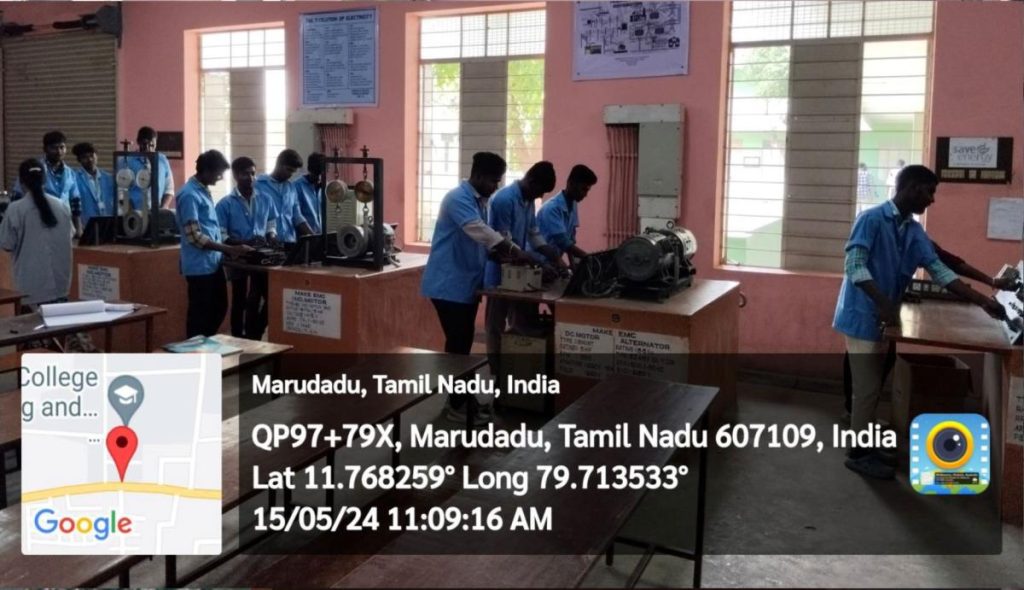
POWER ELECTRONICS AND DRIVES LABORATORY
- DC Shunt Motor Coupled With Three phase Salient Pole Alternator
- DC Shunt Motor Coupled With Three phase non-salient pole Alternator
- DC Shunt Motor Coupled With Three phase Slip ring Induction motor
- Single Phase and Three Phase Induction Motor with Loading Arrangement
- Tachometer -Digital/Analog
- Single Phase and Three Phase Auto Transformer
- Auto Transformer
- Single Phase and Three Phase Resistive Loading Bank
- Resistive Loading Bank
- Capacitor Bank
- Three phase inductive load
- Rheostats
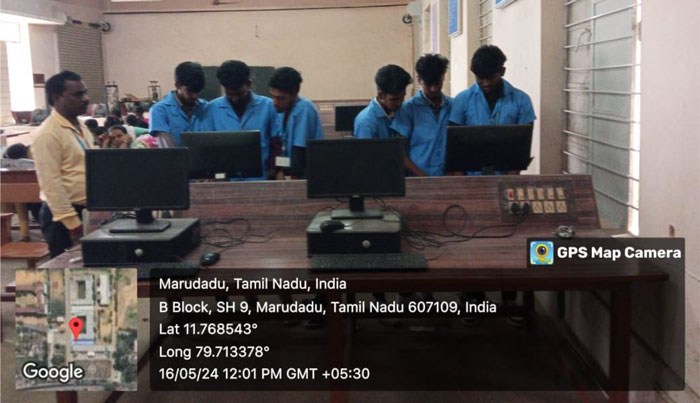
ENGINEERING PRACTICES LABORATORY
- Bread board
- SCR, TRIAC, IGBT, MOSFET
- Single phase Semi and Fully converter
- Step down and Step up chopper
- Single phase and Three phase PWM Inverter
- Buck,Boost and Buck-Boost converter
- AC Voltage Controller
- Regulated DC power supply
- Patch chords
- CRO
- Computer
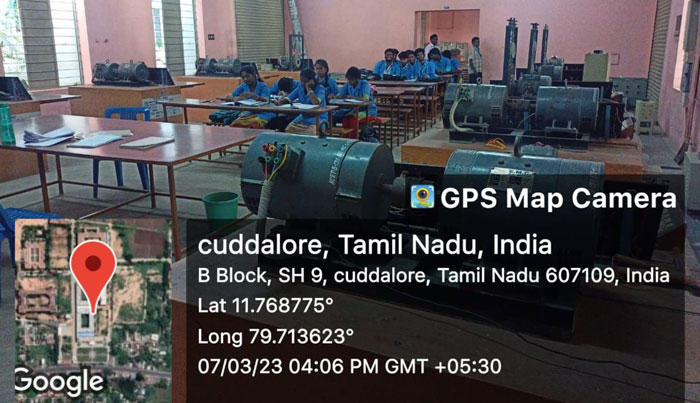
ELECTRICAL MACHINES LABORATORY
- PC loaded with Pspice/ Matlab/ e-Sim / Scilab/ Equivalent Software Package
- Printer
- Regulated Power Supply (0-30V )
- Function Generator (MHz Range)
- Oscilloscope (20 MHz)
- Digital Storage Oscilloscope (20 MHz)
- AC/DC – Voltmeter
- AC/DC -Ammeter
- Multimeter
- Decade Resistance Box, Decade Inductance Box, Decade Capacitance Box
- Single Phase Wattmeter
- Circuit Connection Boards
- Three phase star and delta connected load / Single phase load
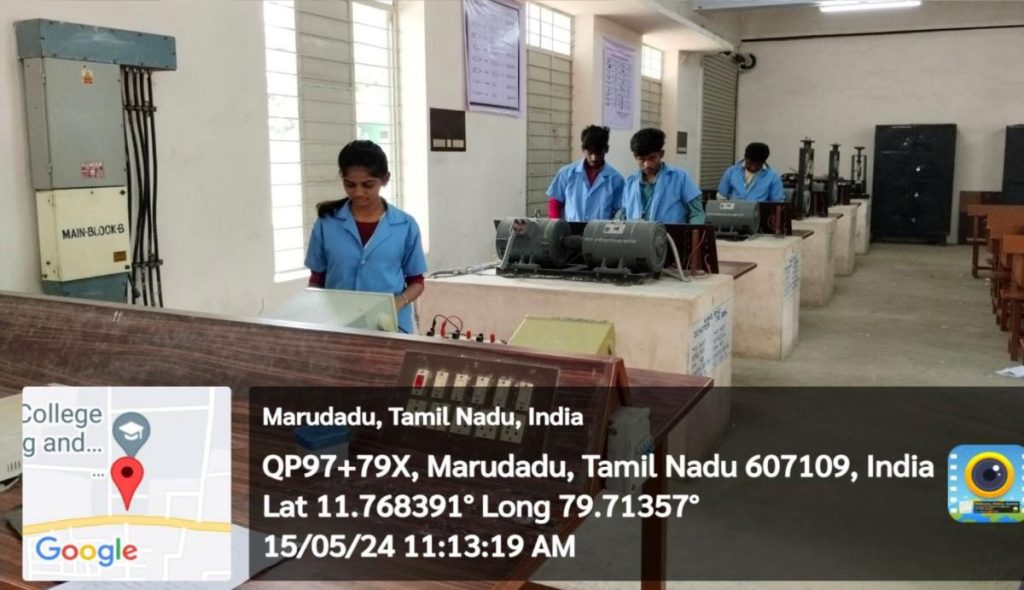
CONTROL AND INSTRUMENTATION LABORATORY
- Sufficient number of PC with Matlab software for analysis of stability of the system
- DC stepper, DC position Servo trainer and AC Servo Motor trainer kit for position and Speed control.
- PID controller, Lag-Lead Network
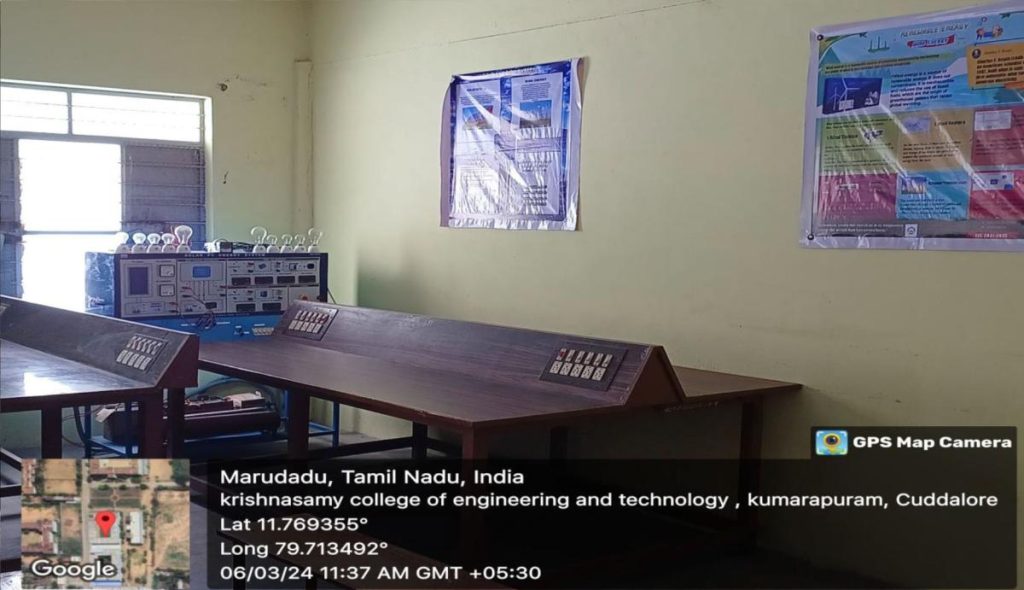
RENEWABLE ENERGY SYSTEM LABORATORY
- This is equipped to do the experiments like house hold wiring, stair case wiring, measurement of insulation resistance of all electrical equipment using megger etc.
Department Library
The department library consists around 683 books at various titles. This library has books for almost all electrical & electronic subject like electrical machines, power system, power electronics, electron devices & circuits, high voltage engineering, renewable energy sources, fuzzy logic & neural network, measurement & instrumentation, power plant engineering, Electrical Drives and Control, Power electronics for Renewable energy, High Voltage Direct Current Transmission, Professional Ethics, Digital Signal Processing, Circuit Theory, Circuit Analysis, Basic electrical and Electronics Engineering, Basic Electrical and Instrumentation Engineering, Renewable Energy sources, Embedded System etc.

| S. No. | Name of the Student | Batch |
|---|---|---|
| 1 | Puguzhenthi M | 2006 |
| 2 | Sridevi T | 2007 |
| 3 | Manikandan S | 2008 |
| 4 | Sathiya S A | 2009 |
| 5 | Kayalvizhi S | 2010 |
| 6 | Verginiya Mary M | 2011 |
| 7 | Kaviya S | 2012 |
| 8 | Seethala N | 2013 |
| 9 | Roja R | 2014 |
| 10 | Sivaranjani S | 2015 |
| 11 | Aarthi S | 2016 |
| 12 | Dhivya S | 2017 |
| 13 | Priyanka J | 2018 |
| 14 | Janani R | 2019 |
| 15 | Kaaviya S | 2020 |
| 16 | Mohammed Suhaib A | 2021 |
| 17 | Preethi R | 2022 |
| 18 | Priyadharshini R | 2023 |
| 19 | Nanthinidevi V | 2024 |
| S. No. | Name of the Student | Batch |
|---|---|---|
| 1 | Nithiya Kothai S | 2013 |
| 2 | Sudha R | 2014 |
| 3 | Sanagamithra P | 2015 |
| 4 | Karthiga Devi K | 2016 |
| 5 | PriyaDharshini V | 2017 |
| 6 | AnuPriya S | 2018 |
| 7 | Sarathkumar B | 2019 |
| 8 | Barathiraja S | 2021 |
| 9 | Jayapragathi V | 2022 |
| 10 | Kaviya G | 2023 |
| 11 | Sowmiya R | 2024 |
ACADEMIC YEAR 2023-2024:
| S.No. | Date | Name of the Programme | Name of the Students | Venue | Remarks |
|---|---|---|---|---|---|
| 1 | 02.07.2023 | Internship Training in “Thermal Power Station II, NLC India Limited”, Neyveli | K. Nandhakumar (IV year-EEE) | NLC India Limited, Neyveli | Participated |
| 2 | 05.07.2023 To 17.07.2023 | Internship National Power Training Institute, Neyveli | Aravindhan U (IV year-EEE) | ||
| 3 | Aruna M (IV year-EEE) | ||||
| 4 | Bharanidharan S (IV year-EEE) | ||||
| 5 | Gokulakrishnan T (IV year-EEE) | ||||
| 6 | Karan C (IV year-EEE) | ||||
| 7 | Kiruthikraja R (IV year-EEE) | ||||
| 8 | Kishore S (IV year-EEE) | ||||
| 9 | K. Nandhakumar (IV year-EEE) | ||||
| 10 | V. Nandhidevi (IV year-EEE) | ||||
| 11 | R. Sudharshan (IV year-EEE) | ||||
| 12 | S. Sugashini (IV year-EEE) | ||||
| 13 | B. Vibooshnavii (IV year-EEE) | ||||
| 14 | A. Akash (IV year-EEE) | ||||
| 15 | K. Sunil Kumar (IV year-EEE) | ||||
| 16 | K. Surya (IV year-EEE) | ||||
| 17 | K. Anamika (III year-EEE) | ||||
| 18 | Harishwaran S (III year-EEE) | ||||
| 19 | P. Jemima Sweety (III year-EEE) | ||||
| 20 | J. Kabilan (III year-EEE) | ||||
| 21 | A. Kanchana (III year-EEE) | ||||
| 22 | P. Kanimozhi (III year-EEE) | ||||
| 23 | K. Levinsia (III year-EEE) | ||||
| 24 | U. Navin (III year-EEE) | ||||
| 25 | V. Nishandhi (III year-EEE) | ||||
| 26 | Premavalan A (III year-EEE) | ||||
| 27 | Reshma A (III year-EEE) | ||||
| 28 | Rooshan D (III year-EEE) | ||||
| 29 | Sangeetha B (III year-EEE) | ||||
| 30 | Selvabharathy G (III year-EEE) | ||||
| 31 | Shalini M (III year-EEE) | ||||
| 32 | Sharmila K (III year-EEE) | ||||
| 33 | Subiksha A (III year-EEE) | ||||
| 34 | Syed Noor Ahmad A (III year-EEE) | ||||
| 35 | Vimal M (III year-EEE) | ||||
| 36 | Siva Surya R (III year-EEE) |
-
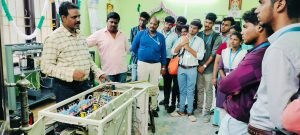
The Final Year students have undergone an Industrial Visit to Energy Power Solutions, Pondicherry on 03.11.2023.

-
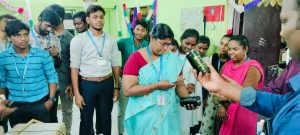
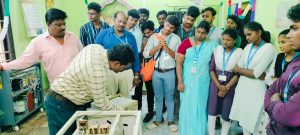
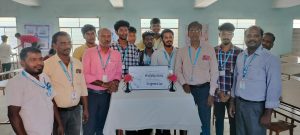
Celebrated Engineer’s Day on 15.09.2023, the Pre Final and Final Year students exhibited their skills and talents through banner and poster presentation.
ACADEMIC YEAR 2022-2023:
- Third-year students attended Workshop on Build your 3D Printer at Madras Institute of Technology, Chennai on 15-4-2023.
- H. Mohammed Ashik attended Inplant Training at Capper Hills (TANGEDCO), Cuddalore from 15-5-2023 to 19-5-2023.
- Department students implemented the “Solar Cell Phone Charger” project which is useful during power failure & traveling time.
- On 16.03.2023, II year EEE Department students visited the power house inside the college campus with safety protocols.
